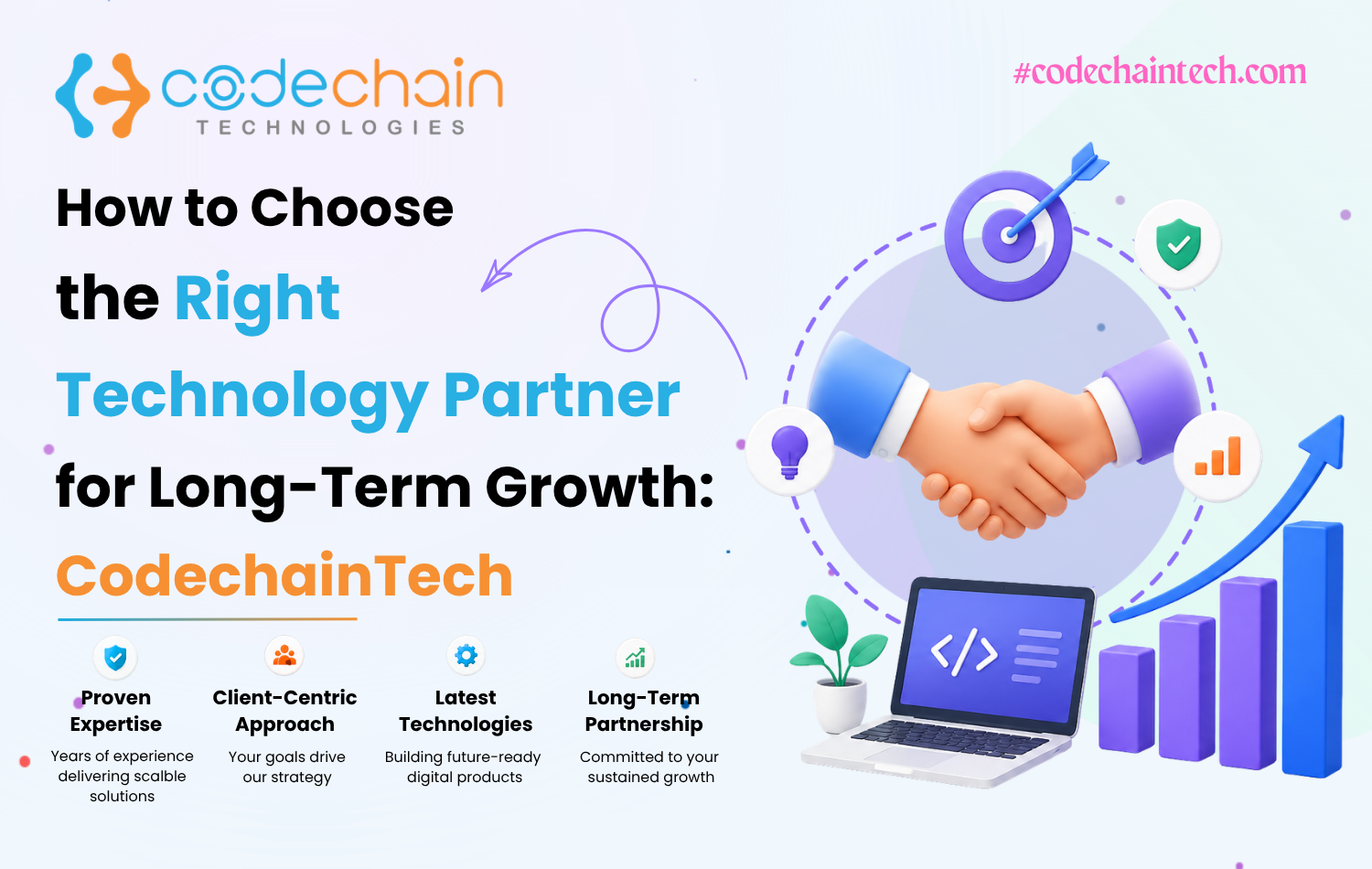
While assessing the ideal technology partner, consider their relevant industry and project experience, the ability to communicate and manage projects clearly, price transparency, security, scalable infrastructures, quality assurance, and adequate post-launch support. Don't just pick the cheapest option. You should consider which companies understand your business and will support the future of your business.
You can't choose a technology partner just because their development prices or list of technologies is favorable. You need a business partner who understands your goals and users and knows your industry and its technical requirements and growth.
For a business planning to undergo digital transformation in 2026, a technology partner should provide the union of all the aforementioned attributes and services.
Why Choosing the Right Technology Partner Matters
Now that technology has become intertwined with business operations, customer experience, marketing, sales, and communication, a poor decision in technology will create a set of problems that will be costly later on.
For example, incompatible frameworks and architecture can seal off business operations from growing. Poorly executed development will lead to a proliferation of bugs and security holes, with communications issues resulting in misunderstandings of features and timelines and budget constraints.
Reliable technology partners, on the other hand, are able to create business operational frameworks that are as modular and as secure as they come.
The partnership should be treated as a continual relationship for technology advancements, not as a short-term development contract.
What is a Technology Partner?
A technology partner is a team or business engaged in the software development part of a firm that helps design, build, deploy, sustain, and iterate digital solutions.
Technology partners differ from development vendors who may focus only on task completion. Since technology partners aim to understand the goals of a business, they may help determine the best technical solutions.
A technology partner may include any of the following in their offering:
A developing eCommerce business may require development of a modular and extensible online selling platform and business-to-business integrations, while a growing health care business may need development of a secure application for their patients. An education business may need a learning management system.
Technical solutions should be crafted around a technology problem, rather than trying to apply the same technical solution to all businesses.
Key Advantages of Selecting the Right Technology Partner
Choosing the right technology partner may offer unique advantages for an organization that last beyond the partnership itself.
Improved Technology Choices
Well-rounded technology partners should be able to review the merits of various frameworks and programming languages and database and API options and the underlying technology infrastructures and select the best fit for the business.
Improved Product Quality
With a structured programming and testing strategy, bugs and issues with product quality and performance can be mitigated.
Greater Scalability
With well-thought-out product architecture, challenges relating to the addition of users, data, transactions, integrations, and features can be addressed more easily.
Better Cost Control
Well-defined requirements, reasonable estimates, and active and open communication can all help in avoiding the additional development costs that arise from avoidable rework.
Long-Term Support
After a product is launched, a technology partner can continue to provide support to the product through ongoing maintenance, optimizations, and adding new features.
How to Evaluate and Select the Right Technology Partner
Evaluating a technology partner requires more than reviewing a portfolio. Evaluate them from the technical, business, operational, and long-term support perspectives.
Technical Expertise
A technology partner should have a depth of understanding of the requirements of your solution.
This relates to knowledge of the frameworks, backend and frontend technologies, databases, APIs, cloud infrastructure, mobile, security, and all other forms of third-party integrations.
What really matters is that they understand the technologies that combine to solve a particular issue and can apply them to your context.
Business Understanding
Technology implementations should align with business goals.
A partner should be able to articulate your goals, customers, the problem being addressed, and the ways in which success can be achieved prior to the start of any development work.
This understanding can avoid unnecessary features and refine development per intended results.
Industry Knowledge
Having knowledge of your industry makes technology more easily mapped to your business.
Workflows, security, integrations, and user expectations can differ on an eCommerce platform, healthcare application, education platform, and enterprise system.
A significant amount of related industry knowledge can assist a technology partner in diagnosing requirements and in identifying challenges in advance.
Clear Communication
Your partner should be able to explain the status of the project, the difficulties they are encountering, and the reasoning behind the requests they make and the timelines they set.
You should be able to understand updates and the current status of the project you hired them to complete.
Strong Project Management
Development of large software systems should be iterative.
To avoid additional complexity in the development of a software system, project managers should establish clear objectives and control scope, timelines, and testing.
Good project management is required to identify challenges and delays.
Security Awareness
Development should not be considered complete without a security audit.
Depending on the project, security may involve authentication, authorization, data protection, secure APIs, encryption, access controls, backups, monitoring, and security testing.
The requirements will vary based on the application and the type of data it handles.
Scalable Architecture
Your business may be smaller today than it will be in the future.
Your partner should therefore consider how the system can support those changes.
Thinking about how to integrate additional features and how to expand infrastructure to support more transactions doesn't mean creating everything from scratch. It means thinking about what the system can do and how to add systems easily.
Transparent Pricing
You should expect fair value based on the anticipated scope of development in addition to a reasonable price.
An initial low cost estimate may end up being more expensive if the software has a poorly constructed architecture and requires redevelopment and testing frequently.
Understanding the proposal details, the exclusions, how alterations will be processed, and the estimated costs to provide ongoing support will be beneficial.
Quality Assurance
Development and testing should occur simultaneously.
Depending on the product, quality assurance may include testing for functionality, responsiveness, multiple browsers and devices, as well as API, integration, performance, and security testing.
Post-Launch Support
The launch of a product is not the end of its life cycle.
Businesses may require support for the launch of new features, bug fixes, and security updates; performance and compatibility enhancements; as well as infrastructure support and help with operations.
A good technology partner will have a clear strategy for support after launch.
Continuous Improvement
The needs of a business will change.
A good technology partner will be able to adjust and enhance the product as the business and its customers change. This could be the addition of new features, performance enhancements, and the incorporation of automation, artificial intelligence, and the connectivity of new systems across more platforms.
Evaluate the Technology Partner's Development Capabilities
The technology partner you select should be able to manage and build the technical framework of your product.
Custom Software Development
Businesses may find that readily available software does not adequately meet their needs, and custom software solutions may. If the needs and processes of a business are especially unique, this may be necessary. Custom software may be designed with specific user roles, workflows, automation, integrations, and reporting in mind, as well as considerations for scaling the software.
Custom Web Development
Your business website does not have to limit you to having an online brochure.
With custom web development, you have the power to create dynamic platforms for customer portals, dashboards, online shops, APIs, automations, payment processing, integrations, and more.
It will be painstakingly made to perform your custom requests while considering usability, security, and the scale of your business.
Custom App Development
Your business could have a need for mobile apps for your customers, employees, or business partners or for operating parts of your business.
With custom app development the business-specific needs of booking, ordering, delivery, learning, communication, payment, or service management apps can be fulfilled.
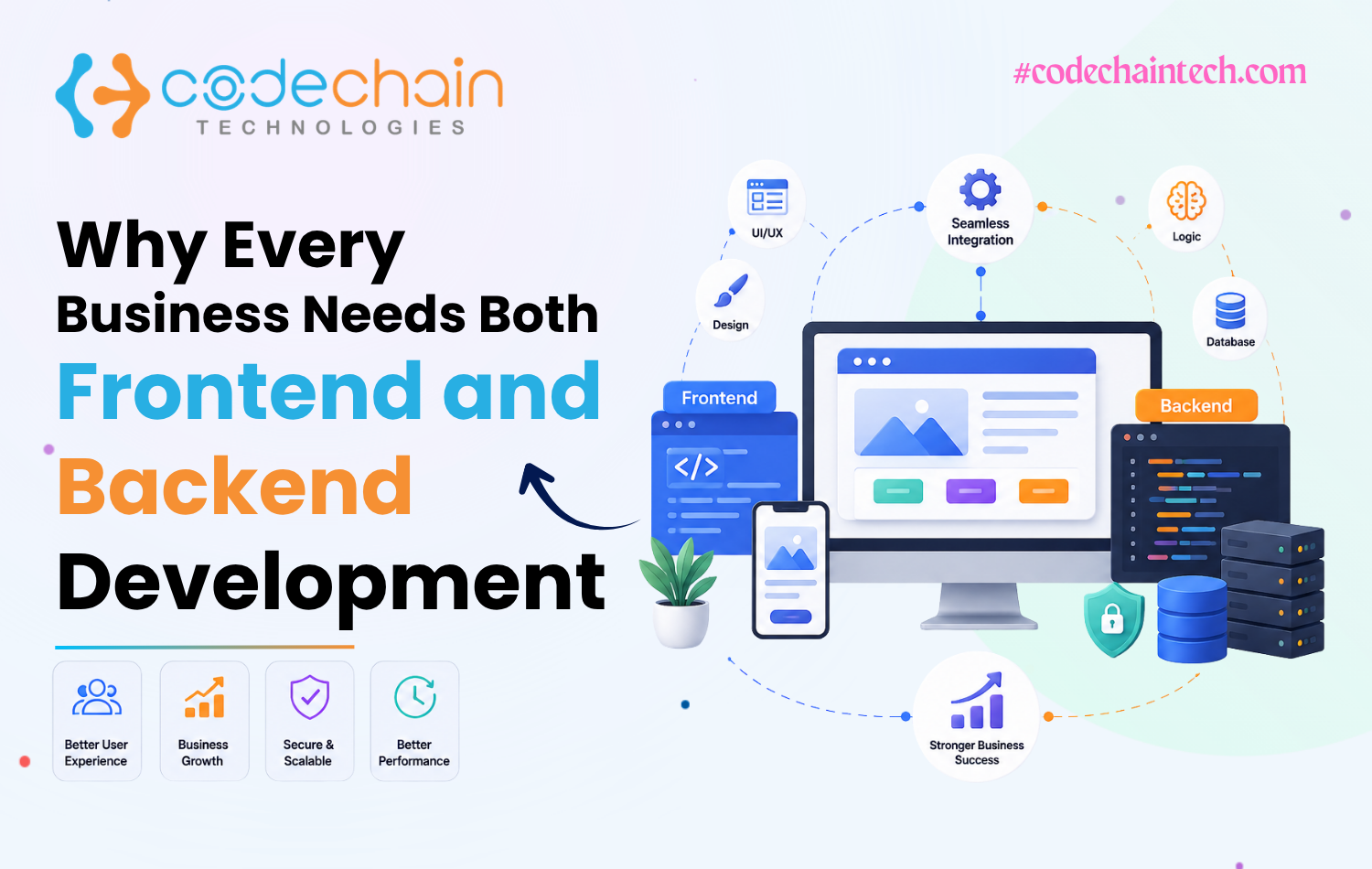
Frontend Development
Frontend development is all about the user experience.
The finished work of all frontend development should yield a product that is responsive, intuitive, and accessible while being quick and consistent.
The team charged with the development of the frontend should have a mastery of modern frameworks, the building blocks of development that can be reused, APIs, responsive design, and speed.
Backend Development
Backend development is all of the work that comes after the user interface.
The backend of a system is its databases and business logic and all of the operations that are server-side.
Like all things in development, the backend is the less visible foundational piece of the system. It plays a vital role in the security of the entire system, how fast it performs, how easy it is to maintain, and if the system can be scaled in the future.
Choose the Right Technology Stack
Which tech stack you should use for a system is determined by its goals, the functionality it should provide, who will be using it, how many users it is expected to have, how sensitive the data will be, how quickly you need it, how you may want it to integrate with other systems in the future, and the future needs of the business.
development, technology will bend to the needs of your business.
Technology Stack & Frameworks
Custom Development: React vs Angular
Building modern web applications has many advantages and disadvantages. Compare React vs Angular to choose a preferred frontend development approach.
React is a component-based and flexible ecosystem, whereas Angular has a more preset and built-in framework structure.
The complexity of the application, the development requirements, the expected performance, and the team's expertise must be taken into consideration, along with the maintainability and long-term support.
Python
Python is suitable for backend development, automation, data processing, and APIs, as well as AI and data-driven solutions.
It is even more useful when businesses integrate software development with AI, analytics, and automation.
Golang
Golang is a suitable choice for backend systems and APIs that require high performance and low resource consumption. It is also suitable for distributed systems and cloud-native applications.
It is necessary to evaluate the architecture and performance of the project to determine if it is a suitable choice.
Laravel
Laravel is a PHP framework that is suitable for developing modern web applications.
It can facilitate coding authentication, routing, and the database and create APIs among the various coding needs for web development.
If a business is already using PHP or if a web framework with a structured approach is needed, Laravel is a suitable choice when it meets the needs of the project.
Mobile Technology: iOS and Android
Businesses that want to reach their customers through mobile technology need to develop a strategy for mobile technology that is aligned with the needs of their customers.
iOS App Development
With iOS app development, there are various ways to meet the standards of Apple’s platform in regard to user experience, operating systems, performance, and security, as well as the App Store.
If a business wants to reach customers that use the iPhone and/or iPad, it is beneficial to have a dedicated iOS app that connects to their backend and corporate APIs.
Android App Development
Android app development involves having to account for various hardware, operating systems, and user interface standards due to the multitude of Android devices.
To ensure an optimal user experience, it is necessary to test on the relevant hardware.
Depending on their business target and how much budget they have, companies can opt for one platform initially or go for both iOS and Android.
Technology Needs by Industry
A good tech partner should know that every industry has its own specific digital needs.
eCommerce
Modern eCommerce platforms should have the ability to manage products, inventory, and customer accounts, as well as handle payments, orders, shipping, promotions, and analytics with the capability of sending notifications and doing integrations.
As the number of customers and transactions grows, the importance of adaptable design increases.
Healthcare
Healthcare technology can include systems for making appointments, patient portals, communication with patients, portals for healthcare records and billing, and operational and reporting systems.
When developing solutions for healthcare, special consideration should be given to security, privacy, and data reliability.
Education
The technology needs of the education sector can be satisfied with digital platforms for online learning, student management, courses, assessments, and communication, as well as administrative and reporting systems.
Many different user roles can result in many different user permissions, which in turn makes systems with role-based access very important.
Other Industries
The technology needs of the finance, retail, logistics, manufacturing, professional services, real estate, hospitality, and many other sectors also vary.
The right technology solution for a sector or industry has to be aligned with a specific business model.
Factors That Impact the Cost of a Technology Partner in 2026
The cost of technology services is based on the size and complexity of the project. The main drivers include:
Complexity of the project
Increased complexity and advanced technology of the project require more design and development work.
Features
Technology solutions that have greater functionality require more development work.
Tech stack
The technologies, from frameworks to databases, used for a given solution may impact cost significantly.
UI/UX concerns
Increased design and development work are required for advanced UI and custom prototyping and greater complexity in user journey mapping and dashboard design.
Integrations
Payment gateways, APIs, CRMs, ERPs, and other shipping integrations entail more development and testing.
Security
Apps requiring sensitive data may need additional security measures and testing.
Cloud services
Hosting, databases, storage, monitoring, backups, and scalability all affect the ongoing cost.
Team
Complex projects may need development, design, QA, and DevOps, as well as other specialists.
Speed
The cost increases with the demand for faster delivery thanks to development done in parallel.
Consumption
The cost of ownership increases with the demand for bug fixes and updates, security and performance tuning, and new features.
Instead of choosing the lowest bid, businesses should weigh cost with quality, scalability, security, support, comprehensive cost of ownership, and long-term value.
Technology Trends businesses should be looking at in 2026
While businesses should adopt technology to solve problems, they shouldn't jump on every trend.
Artificial Intelligence
Artificial intelligence is helpful for business insights, customer support, automation, recommendations, data processing, and document analysis and can help with personalization.
AI can also be an addition to already existing websites, mobile apps, CRMs, ERPs, and enterprise business apps.
Cloud Technology
The cloud can also give flexible infrastructure, storage, databases, and environments for deployment with the added bonus of built-in monitoring and scalability.
The cloud can be an excellent addition for business apps that grow and are "bursting with traffic".
Automation
Automation can aid the many areas of business internally, such as repetitive workflows, state changes, notifications, data processing, business communication, and even customer communication.
The technology partner first identifies what processes will provide substantial automated opportunities.
ERP Software
As a company expands, systems that do not communicate with each other cause duplicate data and labor.
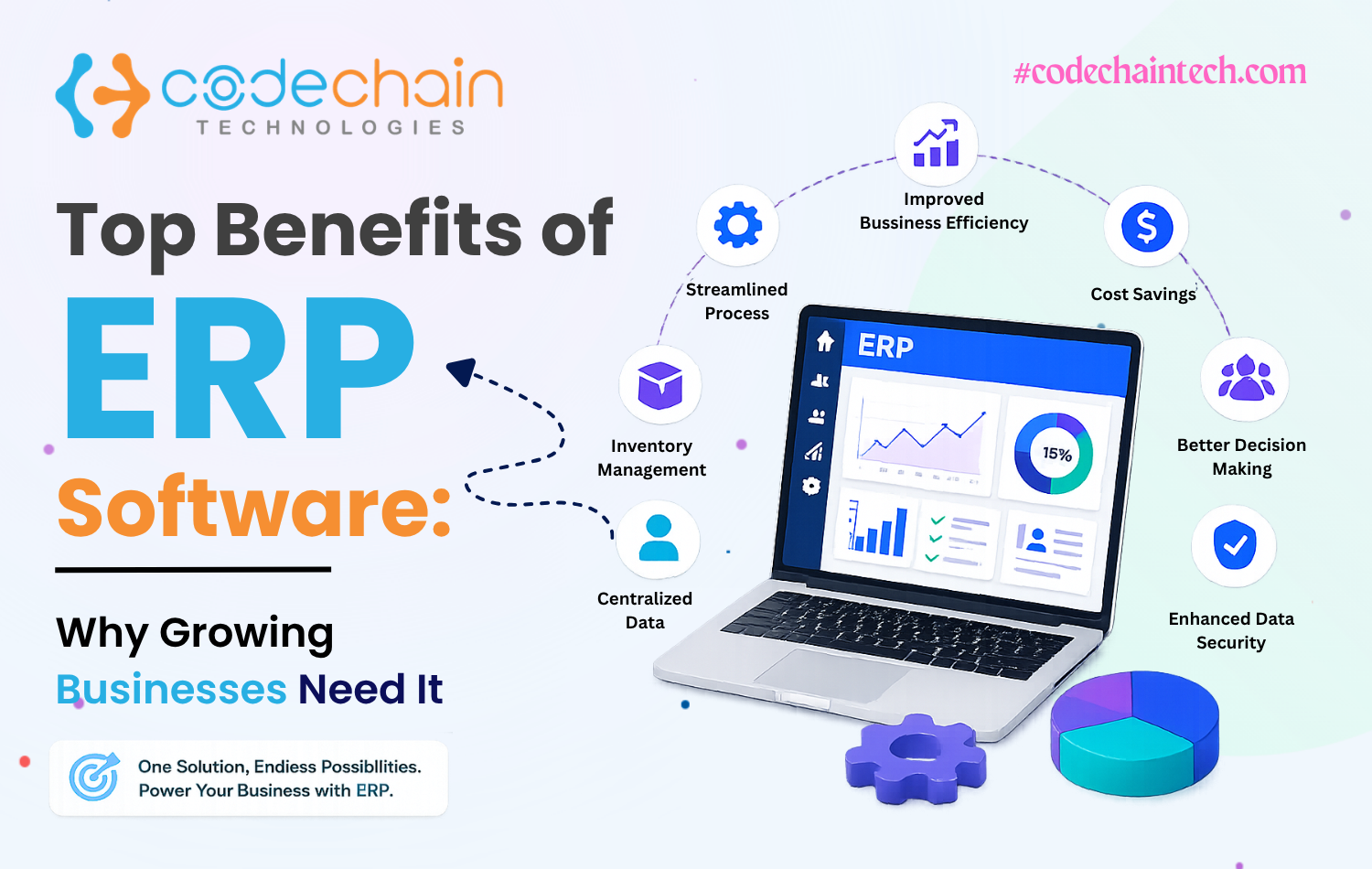
ERP software can consolidate finance, inventory, sales, purchasing, HR, operations, and reporting into a single cohesive system.
Companies that have different or unique processes may need bespoke ERP solutions.
CRM Services
CRM services can assist companies in the structuring of personnel and customer data, lead information, sales activities and communications, and support and customer service follow-ups.
The effectiveness of CRM systems increases with the integration of websites and online stores as well as corporate ERP systems, CRM systems, customer portals, and other business automation systems and marketing services.
Cybersecurity
In 2026, the protection of systems and data should still be a top business concern.
The best way to protect technology is to provide secure authentication, access controls, and protection to APIs; implement controlled data protection with regular updates, monitoring, and backups; and support appropriate security testing.
Data Analytics
Companies gather data from websites, web applications, systems, and platforms, as well as sales channels and interactions with customers.
This data, when coupled with analytics and dashboards, has the potential to aid companies in making informed decisions based on key metrics and trends.
Why Choose CodeChainTech as Your Technology Partner?
The key consideration when choosing a technology partner is to identify a team that has the capacity to appreciate your current needs and the ability to support your future growth.
CodeChainTech has a vision to innovate technology solutions that integrate with business needs rather than standardizing the same solution for each client.
Our focus is on designing and developing digital solutions that are practical, scalable, secure, and maintainable.
Business-Focused Approach
CodeChainTech can begin addressing your business needs by understanding the specific business problem, the target users, the workflows, the technical requirements, and the desired outcomes.
This helps us determine the appropriate constructions and which technologies to implement.
Future Business Needs
After the first stage of development, CodeChainTech is still able to support the business with maintenance and improvement along with the addition of new features, new technology, and integration.
This ensures businesses have a long-term partnership with a technology team that is familiar with the long-term needs of businesses.
Flexibility
As the business grows, so should the digital product developed for the business.
can be an easy process if there is already scaffolding. Things like intelligent structural systems, adaptable frameworks, and clever integration all help make the addition of new users, new features, and new systems and data seamless.
Business Sector-Based Solutions
There are a number of different business sectors, including, but not limited to, eCommerce and healthcare and education. Each of these business sectors has unique technology needs.
Being familiar with the needs of an individual business sector helps create solutions that simplify business processes.
The goal is not to throw every tech stack available at a problem, but to effectively solve a problem using the correct technology.
Development Testing
To avoid inconveniencing users, development should be tested frequently for functional, compatibility, performance, and security concerns.
Multiple Development Options
All businesses are unique. They may not all have the same technology needs at all stages of their business.
What Makes a Successful Long-Term Technology Partnership
A fruitful partnership should be founded on collaboration.
Businesses that want to be successful technology partners should articulate their objectives, share information on current systems, set priorities, and share information more consistently with the technology team.
On the flip side, the technology partner should offer sound advice, be clear on the rationale of their technical choices, and be honest on the scope, timeframe, and budget.
The best partnership is obtained when both parties are focusing on the same goal: the construction of technology that achieves value for the business on a long-term basis.
Conclusion
The goal of selecting the right technology partner is not just finding a code writing company. It includes finding a team that has the knowledge of your business and users, the industry, the technical and security aspects, the budget, and the growth of your business.
At CodeChainTech, because of this, a business should look at the partner's technical and business-related skills and knowledge, communication and project management, security, scalability, pricing, quality, and support and continuous improvement after the launch.
FAQs
-
1
How do you build a long-term partnership with a partner?
Trust-building and a commitment to ongoing improvement, paired with transparent communication and the establishment and alignment of mutual goals, help grow and strengthen a business relationship over time.
-
2
How to choose a digital transformation partner?
When selecting a digital transformation partner, consider their relevant technical experience, industry experience, scalable solutions, effective communication, strong security measures, and post-launch support.
-
3
Which technology will boom in 2026?
The same technologies currently booming are forecasted to continue to be the most significant in 2026, including artificial intelligence, cloud computing, automation, cybersecurity, and data analytics.
-
4
What are the 4 types of partners?
The four main partnership models consist of strategic, technology, channel, and implementation partners.
-
5
What are the 7 pillars of digital transformation?
The seven main aspects of digital transformation consist of strategy, customer experience, employees, processes, technology, data, and the organization's culture.
-
6
Which technology is most in demand?
Highly sought after skills currently are in AI, cloud computing, cybersecurity, data engineering, software development, and automation.
-
7
Which technology has the best future?
The most promising technology for the future is AI and machine learning and the complementary technologies of cloud computing and automation, data and business applications.
-
8
What are the 7 advanced technologies?
The most advanced technologies are AI, machine learning, blockchain, the Internet of things, robotics, cloud computing, and augmented or virtual reality.
-
9
How to choose the right partner?
You check their technical skills and business understanding, their previous work, the way they communicate, their pricing, security, and if they provide a scalable solution with QA and long-term support.
-
10
What is the process for me to discuss my project with CodeChainTech?
You can connect with CodeChainTech through the Contact Us page or reach out to us on Instagram to discuss your project requirements, scope, and technology goals. Follow and message us on Instagram to start the conversation.