Web Development in 2026
Web development is the backbone of the digital world. From simple websites to complex web applications, everything we use online is built using powerful technologies. In 2026, businesses are focusing more on fast, scalable, and user-friendly web solutions. Choosing the correct technology stack isn't just a coding decision; it is a vital business roadmap choice. At CodeChainTech, we’ve seen custom web platforms using optimized backends drop operational costs by up to 25% while handling 10X traffic spikes smoothly.
This specialized guide doesn’t just list tools; it provides an architectural blueprint of the 10 best programming languages for web development in 2026, analyzing their security protocols, scalability metrics, and exact industry use cases to help you lead the market.
What Are Technologies for Building Websites?
Front-end Technologies (Client-Side Interface):
Focuses exclusively on the browser-side user experience (UI/UX). These technologies render layout, interactivity, and design elements using structured components.
Backend Technologies (Server-Side Logic):
Manages underlying server architecture, dynamic API endpoints, and complex database transactions, ensuring secure data flow and user authentication protocols.
Full-Stack Ecosystems (Unified Architecture):
Integrates both client-side presentation and server-side logic, allowing unified development cycles and streamlined deployment for rapid MVP launches.
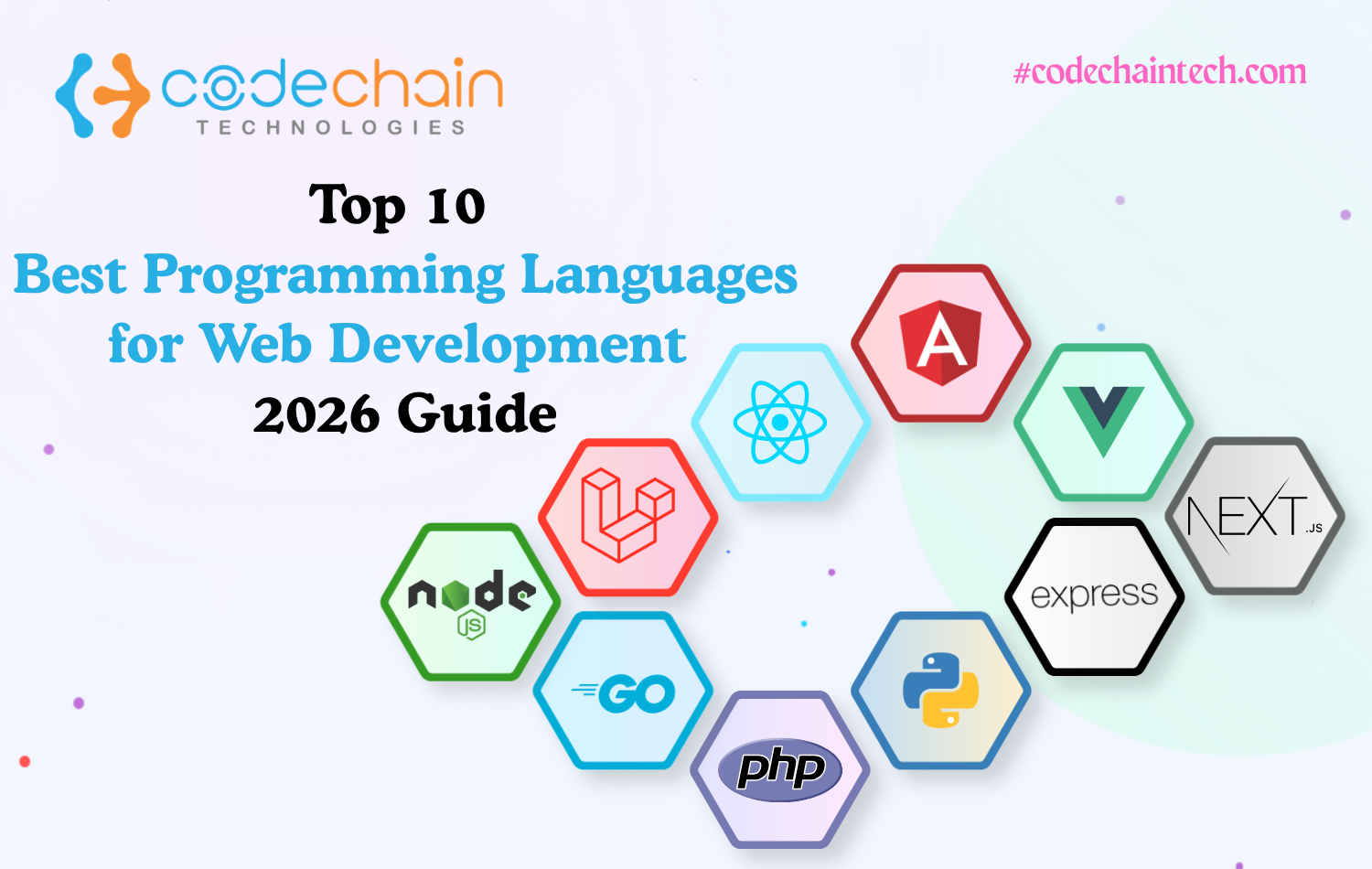
The 10 Best Web Development Tools for 2026
Node.js
If you want to make fast, scalable apps, Node.js is a popular backend tool.
Asynchronous Event-Driven and Non-Blocking I/O
Seamless handling of 10,000+ concurrent connections
Comprehensive NPM package management ecosystem
Laravel
Laravel is a strong PHP framework known for clean code.
- Strict MVC (Model-View-Controller) architecture
- Built-in robust authentication & authorization systems
- Seamless Eloquent ORM for advanced database migrations
React.js
React.js is a popular front-end library for interactive UIs.
- Efficient Virtual DOM rendering mechanism
- Reusable UI components for rapid implementation
- Strong structural state management and hooks
Angular.js
Google's Angular.js is a powerful platform for enterprise apps.
- Native two-way data binding for instant synchronization
- In-built dependency injection and modular ecosystem
- Strict architectural guidelines for enterprise workflows
Vue.js
Vue.js is a lightweight and flexible framework.
- Ultra-lightweight core setup with great performance
- Simple, intuitive learning curve for engineering teams
- Flexible reactivity system for quick extensions
Next.js
Next.js is a React-based framework for modern web apps.
- Native Server-Side Rendering (SSR) & Static Site Generation (SSG)
- Optimized Core Web Vitals for superior SEO indexing
- Zero-configuration routing and API handling paths
Express.js
Node.js with Express.js is a fast, minimalist backend framework.
- Extremely lightweight framework with zero boilerplate fat
- Powerful and flexible HTTP middleware integration paths
- Simplified configuration for RESTful API structures
Python
Python is a versatile language widely used in web development.
- Highly readable, maintainable, and human-friendly syntax
- Access to premier web frameworks like Django and FastAPI
- Native cross-compatibility with advanced AI and ML pipelines
PHP
PHP is a widely-used server-side scripting language.
- Deep and effortless native database connectivity options
- Powers the world's leading CMS architectures like WordPress
- Cost-effective hosting setup and massive global community help
GoLang
GoLang is a modern language developed by Google.
- Lightweight Goroutines for flawless concurrent process execution
- Compiles directly to machine code for blazing performance
- Low memory footprint dropping enterprise cloud infrastructure costs by 30%
How to Pick the Correct Tech for Your Company
| Business Intent / Project Nature | Recommended Technology Stack | 2026 Competitive Benefit |
| High-Traffic Enterprise Apps | GoLang + React.js | Direct machine code compilation for extreme concurrency. |
| SEO-First Platforms & E-commerce | Next.js + Node.js | Automated Core Web Vitals optimization via SSR. |
| AI & Data-Heavy Systems | Python (FastAPI/Django) | Native compatibility with advanced LLM integration pipelines. |
| Rapid MVP Startup Launches | Laravel (PHP) + Vue.js | Expressive syntax & built-in modules for faster deployment. |
Why Web Development Technologies Are Important
When you use the right tools, they help your business:
- Improve website performance
- Enhance user experience
- Ensure security
- Scale your business smoothly
A well-architected website builds trust and drives customer engagement.
Why Should You Hire Professional Web Developers?
A powerful website requires expertise across multiple tools and platforms. A professional team can:
- Audit and select the most efficient 2026 technology stack
- Build secure, test-driven, and scalable cloud applications
- Optimize Core Web Vitals and achieve sub-millisecond page speed
- Provide long-term infrastructure maintenance and continuous monitoring
We at CodeChainTech are experts at engineering modern web solutions tailored to your unique business objectives. Our technical specialists leverage advanced GoLang, Node.js, and React ecosystems to deliver secure, high-performance platforms that drive sustainable, long-term revenue growth.
Conclusion
Building websites is all about combining the right set of tools. Performance, scalability, and flexibility make tools like Node.js, React.js, Laravel, and Python the best in their categories.
A lot depends on how well you choose the technology stack for your project. With CodeChainTech by your side, these 10 top web development technologies will help you stay ahead of the competition — whether you're building a small business website or a large-scale enterprise platform.
FAQs
-
1
What are the best programming languages for web development in 2026?
The top languages include Node.js, Python, PHP, Go, and modern frameworks like React.js and Angular.js.
-
2
Is React still dominant for frontend web development in 2026?
Yes, React.js remains the most dominant frontend library in 2026, powering over 40% of modern web applications due to its massive ecosystem, component reusability, and seamless integration with full-stack frameworks like Next.js.
-
3
Which language is best for beginners in web development?
JavaScript is the best starting point due to its versatility in the frontend and backend.
-
4
What is the role of Node.js in web development?
Node.js is used for building fast, scalable backend applications and APIs.
-
5
Why is React.js popular in web development?
React.js is popular for creating fast and interactive user interfaces.
-
6
Is Python good for web development?
Yes, Python is widely used for scalable and data-driven web applications.
-
7
Why are modern web development frameworks preferred over raw programming languages?
Modern frameworks (like Next.js or Laravel) are preferred because they provide developers with pre-built modules, standardized security middleware, and structured routing protocols. This eliminates writing repetitive boilerplate code, ensuring teams can securely launch custom web features up to 40% faster.
-
8
Which backend language is best in 2026?
Node.js, Python, and Go are among the best backend technologies in 2026.
-
9
What is Laravel used for in web development?
Laravel is used for building secure and scalable PHP-based web applications.
-
10
How to choose the right programming language for web development?
Choose based on your project needs, scalability, and performance requirements.