Web App vs Mobile App
Both options have unique strengths and limitations, and the right choice depends on your goals, audience, and resources. In this article, we’ll explore the differences between mobile app development vs web development, their pros and cons, cost factors, and future trends so you can make the best decision for your business.
What is a Web App?
A web application is software that runs in a browser. Unlike traditional websites, web apps are interactive and dynamic, designed to perform functions like managing accounts, editing files, or tracking tasks.
Examples: Gmail, Slack (browser version), Caneva.
Key Features of Web Apps:
- Accessible via a URL (no downloads).
- Works on multiple devices with responsive design.
- Updates automatically—no app store approval required.
For many businesses, web app development offers a cost-effective way to reach a wider audience quickly.
What is a Mobile App?
A mobile app is software built specifically for smartphones or tablets. Mobile apps are downloaded from the App Store (iOS) or Google Play (Android).
Examples: Uber, WhatsApp, Instagram.
Key Features of Mobile Apps:
- Optimized for mobile performance.
- Can use device-specific features like GPS, camera, and push notifications.
- May work offline (depending on functionality).
- Provides a more personalized experience.
Many businesses hire a mobile app development company to create native apps for iOS and Android or choose cross-platform frameworks like Flutter and React Native.
Benefits of Web Apps
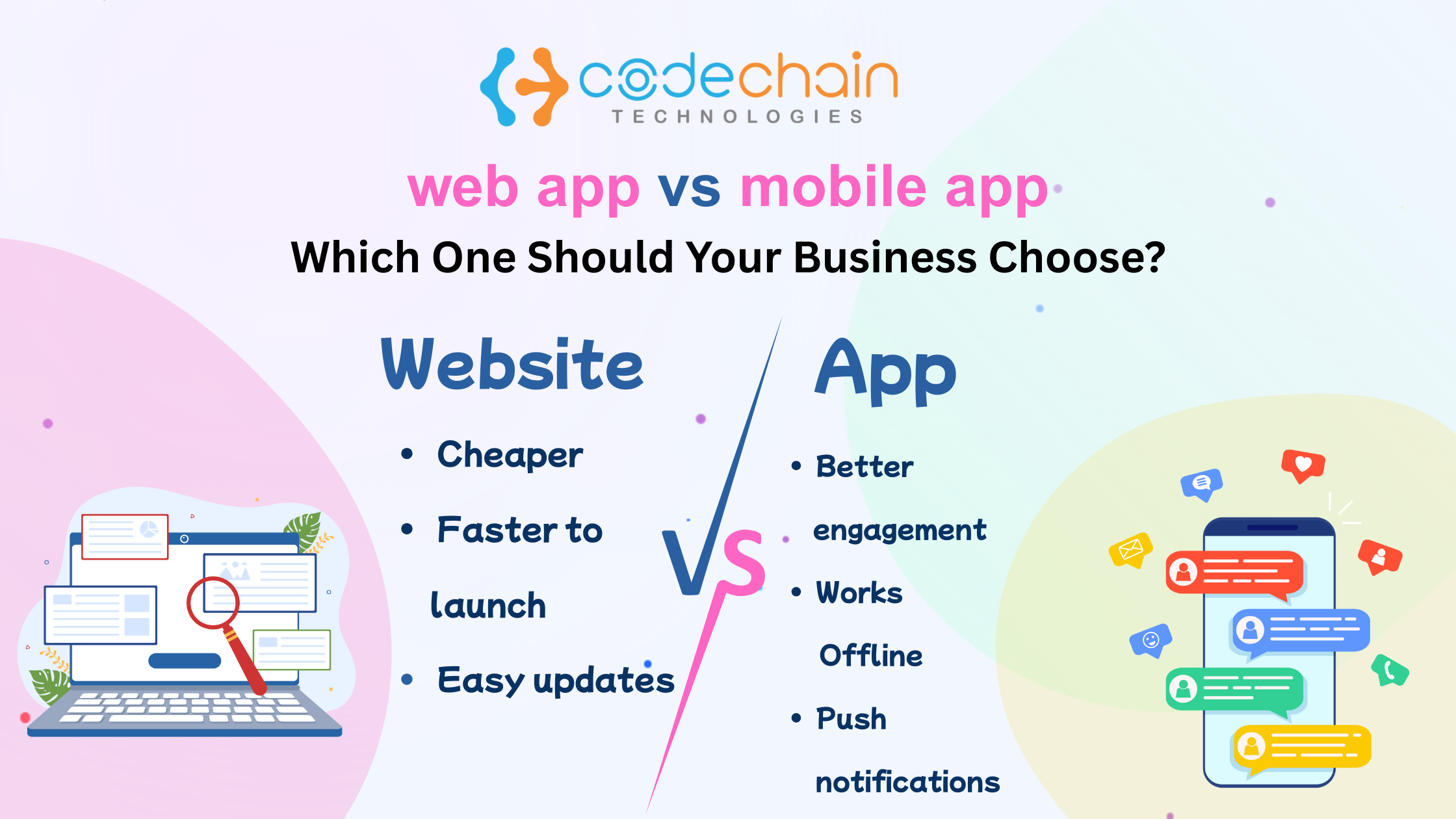
- 1. Cost-Effective Development – One app works across browsers and devices.
- 2. Faster to Market – No app store approvals; instant launch.
- 3. Easier Maintenance – Updates roll out automatically to all users.
- 4. Accessible Anywhere – Users just need a browser and internet.
Benefits of Mobile Apps
- 1. Better Performance – Native apps are optimized for speed and responsiveness.
- 2. Offline Functionality – Many apps continue working without internet.
- 3. Engagement via Push Notifications – Keeps users active and loyal.
- 4. Stronger Brand Presence – Being on app stores builds trust.
- 5. Access to Device Hardware – Mobile apps can use GPS, biometrics, AR, and cameras.
Comparison: Web App vs Mobile App
| Feature | Web App | Mobile App |
|---|---|---|
| Accessibility | Runs on browser, no download needed | Must download from app store |
| Speed to Market | Faster (no approvals) | Slower (requires review & publishing) |
| Development Cost | Lower (one app fits all browsers) | Higher (iOS + Android separate dev) |
| User Experience | Limited by browser capabilities | Richer, more personalized |
| Device Integration | Minimal access | Full access (GPS, camera, sensors) |
| Offline Use | Limited | Available in many apps |
| Updates | Automatic on server | User must update via app store |
Cost Considerations
- Web App Development: Typically costs less, as one version serves all users.
- Mobile App Development: Requires separate builds for iOS and Android (unless you use cross-platform frameworks). This increases cost and maintenance.
An experienced app development company like CodeChain can guide you through cost-effective solutions, whether you want a web app, a mobile app, or both.
User Behaviour Insights
- If your audience is mobile-first (e.g., Gen Z, app-heavy users), a mobile app may be the best choice.
- If your users prefer desktop or multi-device access, a web app could be more effective.
- Many successful businesses combine both strategies to maximize reach.
Future Trend: Progressive Web Apps (PWAs)
One of the most exciting innovations is the Progressive Web App (PWA).
Brands like Twitter, Starbucks, and Pinterest have adopted PWAs to reduce friction and boost engagement.
Choose Web App
affordability, instant accessibility, easier updates, and broad reach.
Choose Mobile App
deeper engagement, offline functionality, push notifications, and device integration.
Choose Both / PWA
long‑term scalability, best of both worlds.
How CodeChain Can Help
If you’re still unsure which option is right for your business, our team at CodeChain specializes in:
We guide businesses from idea to launch, ensuring apps are scalable, secure, and future-ready.
Conclusion
The debate of web app vs mobile app isn’t about which is better—it’s about which is better for your business.
If you want speed, affordability, and easy updates, go for a web app.
If you want richer experiences, push notifications, and offline use, choose a mobile app.
And if you want both worlds, explore PWAs or hybrid solutions.
With expert guidance from an experienced app development company like CodeChain, you can make the right investment and build digital products that truly connect with your audience.
FAQs
-
1
What is the main difference between a web app and a mobile app?
A web app runs in a browser and doesn’t need to be downloaded, while a mobile app is installed on smartphones and offers deeper integration with device features like GPS and push notifications.
-
2
Which is cheaper: web app development or mobile app development?
Web app development is generally more cost-effective since one version works across devices, while mobile app development may require separate builds for iOS and Android, increasing costs.
-
3
When should a business choose a web app?
Choose a web app if you want affordability, instant access, faster time-to-market, and easy updates for a wide audience.
-
4
When should a business choose a mobile app?
Choose a mobile app if you need offline functionality, push notifications, better performance, and access to device hardware like camera or GPS.
-
5
What is a Progressive Web App (PWA)?
A PWA combines the best of both web and mobile apps. It runs in a browser but can also be installed on a device, supports offline use, and allows push notifications.
-
6
Do mobile apps offer better user engagement than web apps?
Yes, mobile apps generally offer better engagement due to push notifications, personalization, and easier access on smartphones.
-
7
How can CodeChain help with web and mobile app development?
CodeChain specializes in web app development, mobile app development, and PWAs. We deliver scalable, secure, and future-ready apps tailored to your business goals.