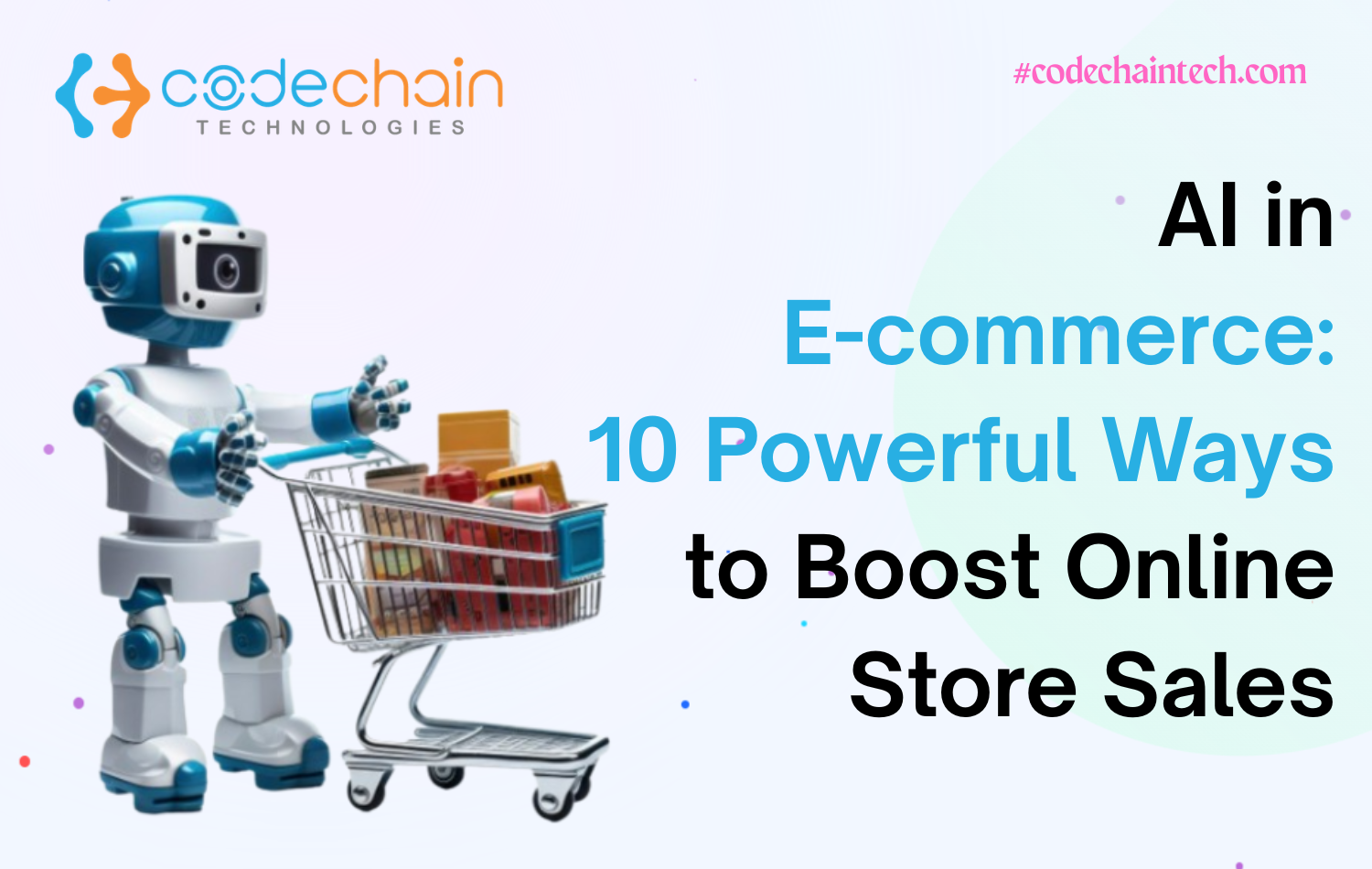
AI in E-commerce — The Future of Online Sales
What is AI in E-commerce?
AI in e-commerce refers to using artificial intelligence technologies such as machine learning, predictive analytics, natural language processing, and automation to improve online store performance. These technologies analyze customer data, automate tasks, and provide personalized experiences that increase conversions.
AI can be used for product recommendations, chatbots, search optimization, pricing automation, customer segmentation, and fraud detection. Businesses that adopt AI-driven e-commerce strategies can enhance customer engagement and drive more sales.
Why AI is Important for Online Stores
✦ Benefits of AI in E-commerce
- Improves customer personalization
- Increases conversion rates
- Automates marketing campaigns
- Enhances customer support
- Optimizes pricing strategies
- Reduces cart abandonment
- Improves product discovery
- Boosts customer retention
10 Powerful Ways AI Boosts Online Store Sales
AI-Powered Product Recommendations
AI analyzes customer behavior, browsing history, and purchase patterns to suggest relevant products. These personalized recommendations increase average order value and improve customer experience.
AI-driven recommendations encourage customers to explore more products and increase sales.
- Frequently bought together products
- Related product suggestions
- Personalized homepage recommendations
- Recently viewed items
AI Chatbots for Customer Support
AI chatbots provide instant responses to customer queries, improving engagement and reducing bounce rates. These chatbots can handle product inquiries, order tracking, and support requests.
AI chatbots guide customers through the buying process, helping them make purchasing decisions.
- 24/7 customer support
- Faster response time
- Reduced support cost
- Improved user experience
- Increased conversions
Personalized Shopping Experience
AI personalizes the entire shopping journey based on user behavior. This includes customized product listings, targeted offers, and tailored content.
Personalized experiences increase engagement and improve conversion rates.
- Personalized homepage
- Custom product suggestions
- Personalized discounts
- Email recommendations
- Location-based offers
Smart Search with AI
AI-powered search helps customers find products quickly. Unlike traditional search, AI understands user intent software development and displays relevant results.
Smart search improves product discovery and reduces friction in the buying process.
- Auto suggestions
- Voice search
- Image search
- Natural language processing
- Typo correction
Dynamic Pricing Optimization
AI analyzes market trends, competitor pricing, and demand to adjust product prices automatically. This helps businesses maximize profit and stay competitive.
AI pricing strategies help businesses increase conversions and revenue.
- Competitive pricing
- Increased profit margins
- Real-time price updates
- Demand-based pricing
- Seasonal pricing optimization
AI-Based Customer Segmentation
AI divides customers into groups based on behavior, demographics, and preferences. Businesses can then create targeted marketing campaigns.
Targeted marketing leads to higher sales and better ROI.
- Target high-value customers
- Personalize marketing campaigns
- Improve email conversions
- Increase retention rates
- Optimize ad targeting
AI Email Marketing Automation
AI automates email campaigns based on customer behavior. It sends personalized emails at the right time to increase engagement.
Automated emails improve conversion rates and customer retention.
- Abandoned cart emails
- Product recommendations
- Re-engagement campaigns
- Personalized offers
- Purchase follow-ups
Predictive Analytics for Sales Growth
Predictive analytics uses AI to forecast customer behavior and future trends. Businesses can make data-driven decisions to boost sales.
AI-driven insights help businesses plan better and increase revenue.
- Forecast demand
- Optimize inventory
- Identify trending products
- Improve marketing strategy
- Reduce stockouts
AI Fraud Detection and Security
AI monitors transactions and detects suspicious activities. This improves customer trust and prevents revenue loss.
Secure platforms improve customer confidence and increase conversions.
- Fraud detection
- Payment security
- Risk analysis
- Account protection
- Transaction monitoring
AI-Powered Visual Search
Visual search allows customers to upload images and find similar products. This improves product discovery and enhances user experience.
Visual search simplifies the shopping process and increases sales.
- Faster product discovery
- Better user experience
- Increased engagement
- Higher conversion rates
- Mobile-friendly shopping
How AI Improves E-commerce Conversion Rates
AI improves conversion rates by delivering personalized experiences, optimizing pricing, and providing intelligent recommendations. Businesses can reduce bounce rates and guide customers toward purchase decisions.
- Personalized product suggestions
- Faster search results
- Automated customer support
- Smart pricing strategies
- Targeted marketing campaigns
These AI features help online stores convert more visitors into customers.
Future of AI in E-commerce
AI in e-commerce will continue to grow with advanced technology such as voice commerce, augmented reality shopping, and hyper-personalization. Businesses adopting AI early will gain a competitive advantage.
Why Choose CodeChainTech for AI E-commerce Solutions
CodeChainTech provides advanced AI-powered e-commerce services designed to increase online store sales. Our team builds intelligent platforms that improve customer experience and automate operations.
- AI-powered e-commerce development
- Product recommendation engines
- AI chatbot integration
- Smart search implementation
- Predictive analytics dashboards
- Personalization systems
We help businesses build scalable and intelligent e-commerce platforms.
Conclusion
AI in e-commerce is transforming how businesses sell online. From personalized recommendations to smart search and dynamic pricing, AI helps increase conversions and improve customer experience. Businesses that adopt AI technology can automate operations, reduce costs, and boost revenue.
FAQs
-
1
What is AI in e-commerce?
AI in e-commerce refers to using artificial intelligence technologies like machine learning, chatbots, and predictive analytics to improve online shopping experiences, automate tasks, and increase sales.
-
2
How does AI help increase online store sales?
AI boosts sales by offering personalized product recommendations, smart search, automated marketing, dynamic pricing, and AI chatbots that guide customers through the buying process.
-
3
What are examples of AI in e-commerce?
Common examples include product recommendation engines, AI chatbots, personalized emails, visual search, voice search, dynamic pricing, and customer behavior analysis.
-
4
Can small e-commerce businesses use AI?
Yes, small businesses can use AI tools for chatbots, email automation, product recommendations, and analytics to improve conversions and customer engagement.
-
5
How do AI chatbots help e-commerce stores?
AI chatbots provide instant customer support, answer product questions, recommend items, and reduce cart abandonment, leading to higher conversions.
-
6
What is AI product recommendation in e-commerce?
AI product recommendation analyzes customer behavior and suggests relevant products, increasing average order value and improving the shopping experience.
-
7
Does AI improve customer experience in e-commerce?
Yes, AI personalizes shopping journeys, improves search accuracy, provides quick support, and shows relevant products, enhancing overall customer experience.
-
8
What is AI-powered search in e-commerce?
AI-powered search understands user intent, auto-corrects keywords, supports voice search, and displays relevant product results quickly.
-
9
Is AI expensive for e-commerce businesses?
AI solutions are available at different price ranges. Many affordable tools allow businesses to implement AI without large investments.
-
10
How can CodeChainTech help with AI in e-commerce?